

Community access is an important part of helping people with disabilities participate in everyday activities, build confidence and maintain social connections. Through the NDIS, eligible participants may receive support to access community activities, appointments, social events, recreational opportunities and essential services.
However, community access can come with practical and personal challenges. Understanding these barriers can help participants, families and support networks find appropriate solutions across Brisbane, Logan and Ipswich.
What Is NDIS Community Access?
NDIS community access generally involves supporting a person with disability to participate in activities and services outside their home. Depending on individual needs and goals, this may include visiting community centres, attending appointments, shopping, joining social groups, participating in recreational activities or developing independence.
The type and level of support required can vary considerably between participants.
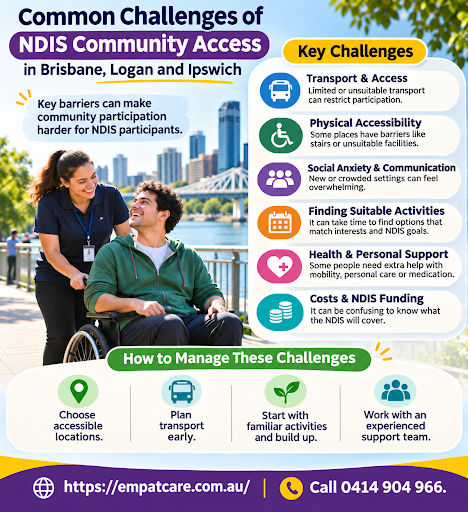
Transport and Accessibility Challenges
One of the most common barriers is getting to and from community activities. Limited access to suitable transport, difficulty using public transport or the need for specialised transportation can make regular participation challenging.
Participants in Brisbane, Logan and Ipswich may also need to travel considerable distances to access particular services or activities. Planning accessible and reliable transport can therefore be an important part of successful community participation.
Physical Accessibility
Not every public space or community facility is equally accessible. Participants may encounter stairs, narrow entrances, unsuitable toilets, uneven pathways or inadequate accessibility features.
These barriers can make seemingly simple activities more difficult. Checking accessibility requirements before visiting a location can help reduce unnecessary difficulties and improve the overall experience. That’s why support workers personalise community access services in Brisbane and other surrounding regions accordingly.
Social Anxiety and Communication Barriers
Community participation can sometimes feel overwhelming, particularly for people who experience social anxiety, communication difficulties or challenges adapting to unfamiliar environments.
Busy shopping centres, crowded public spaces and unfamiliar social situations may cause stress. Having appropriate support can help participants gradually become more comfortable while developing communication and social skills.
Finding Suitable Activities
Another challenge can be finding activities that genuinely match an individual’s interests, abilities and NDIS goals. Not every community programme will be suitable for every participant.
For example, someone interested in sport may need an inclusive recreational programme, while another participant may prefer art, volunteering, social groups or educational activities. Identifying suitable options can take time and may require support from family members, support coordinators or disability service providers.
Health, Safety and Personal Support Needs
Some participants require assistance with mobility, personal care, medication management or other day-to-day needs while they are in the community.
Support requirements as part of community access services in Logan and nearby regions can also change depending on the activity or environment. A participant may feel confident in a familiar location but require greater assistance when visiting somewhere new.
Planning ahead and clearly communicating individual support requirements can help make community outings safer and more comfortable.
Managing Costs and NDIS Funding
Understanding what NDIS funding can and cannot cover can sometimes be challenging. Participants may need to consider their available funding, support requirements and the type of activity they want to undertake.
It is important to understand how proposed community access supports relate to an individual’s NDIS plan and goals. Good planning can help participants use their available supports effectively.
How Can These Challenges Be Managed?
A personalised approach can make community access more manageable. This may involve choosing accessible locations, planning transport in advance, starting with familiar activities and gradually introducing new environments.
Working with suitable support workers and other members of a participant’s support network can also help identify practical solutions. Most importantly, community access should focus on the individual’s preferences, goals, abilities and desired level of independence.
Making Community Participation More Inclusive
NDIS community access services in Ipswich and nearby regions can provide valuable opportunities for people with disabilities to connect with others, explore their interests and participate more actively in everyday life. While challenges exist, appropriate planning and individualised support can help reduce barriers.
For participants across Brisbane, Logan and Ipswich, understanding these challenges is an important first step towards creating community access experiences that are safe, meaningful and empowering.
Make Community Access More Inclusive
Everyone should have the opportunity to participate in their community with confidence and dignity. With personalised NDIS community access support by Empatcare, participants across Brisbane, Logan and Ipswich can work towards greater independence, social connection and participation in activities they enjoy. Call 0414904966 to discuss your needs with us.
What are the main challenges of NDIS community access?
Common challenges include transport difficulties, physical accessibility barriers, communication challenges, social anxiety, finding suitable activities and managing individual support needs.
Can NDIS community access support help with transport?
Depending on a participant's circumstances and NDIS plan, support may help them access community activities and services. Transport-related funding and supports depend on individual needs and plan arrangements.
How can NDIS participants overcome accessibility barriers?
Planning ahead, checking venue accessibility, choosing suitable transport and having appropriate support can help participants manage physical and environmental barriers.
Can community access support help build independence?
Yes. Appropriate support can help participants develop confidence, practise everyday skills, build social connections and gradually become more independent in their communities.
How can I find suitable community activities in Brisbane, Logan or Ipswich?
Consider the participant's interests, abilities, accessibility requirements and NDIS goals when choosing activities. Support workers, families and other members of the participant's support network can also help identify suitable options.