


A quiet Brisbane lounge room became the setting for a conversation that thousands of families across Queensland have been having lately. A support plan renewal letter sat on the table, and questions started piling up faster than answers. What does mandatory registration actually mean? Will current supports still be available? Is it time to start looking more closely at trusted NDIS providers Brisbane families already lean on? These are the exact questions rippling through loungerooms, kitchen tables, and support coordination meetings across the state as the 2026 reforms take full effect.
The Reform Wave Nobody Saw Coming This Fast
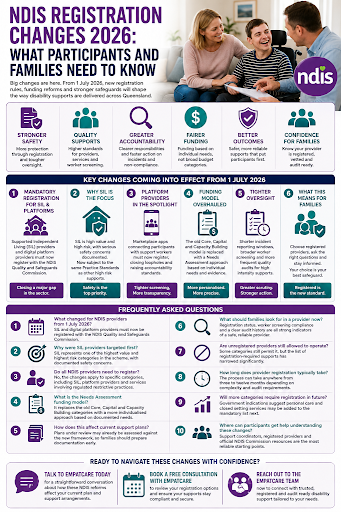
The National Disability Insurance Scheme has just been through its most significant shake up since it began. Parliament passed the NDIS Amendment (Integrity and Safeguarding) Act 2025, and from 1 July 2026, the first real changes landed. Supported Independent Living providers and digital platform providers are now required to register with the NDIS Quality and Safeguards Commission, closing a gap that previously let a huge slice of the sector operate unregistered. For context, only a small fraction of providers were registered before this shift, so the ripple effect across disability support Brisbane wide has been significant.
Why SIL Providers Are Front and Centre
Supported Independent Living sits among the highest value and highest risk categories in the entire scheme, and it’s also where some of the most serious documented safety concerns have occurred. That’s exactly why regulators zeroed in on it first. Group homes, shared living arrangements, and overnight support providers must now meet the same Practice Standards already applied to specialist behaviour support and accommodation services. Families searching for reliable NDIS support Brisbane wide are increasingly prioritising registration status as a genuine safety filter, not just a box ticking exercise.
Looking for trusted disability support you can rely on?
Connect with Empatcare today and discover personalised, compassionate services designed to help you achieve your goals and live with greater confidence and independence.
Platform Providers Get Pulled Into the Spotlight Too
It’s not only traditional providers feeling the change. Digital platforms connecting participants with independent support workers, essentially marketplace-style apps operating in the disability space, now fall under the same registration umbrella. This closes a loophole that had grown significantly as more people turned to app based booking for everyday supports. Anyone relying on these platforms should expect tighter worker screening, clearer accountability, and more transparent service agreements moving forward.
The Budget Model Getting a Total Rebuild
Alongside registration changes, the way funding itself gets structured is shifting too. The long familiar three category budget model built around Core, Capital, and Capacity Building supports is being replaced with a more individualised Needs Assessment approach. Instead of assumed flexibility across broad categories, funding allocation will be shaped more precisely around documented individual needs. For families already juggling plan reviews, this means paperwork and evidence gathering matter more than ever before.
Faster Reporting, Tighter Oversight
Incident reporting windows have been shortened considerably, and mandatory worker screening now applies to a wider range of roles across the sector. Quality audit cycles have also tightened, particularly for high-intensity support providers. Practically speaking, this means disability services Brisbane wide are under far greater scrutiny than they were even twelve months ago, and non-compliance now carries immediate consequences rather than a simple warning letter.
What This Actually Means for Families Right Now
For participants and carers, the headline takeaway is straightforward. Choosing a registered provider has shifted from being a nice to have to being a genuine safeguard. Plans already under review are being assessed against the new framework, months before broader legislative pieces even land. Families are encouraged to ask direct questions about registration status, worker screening, and audit history before committing to any new support arrangement.
Staying Ahead of the Curve
The pace of reform shows no sign of slowing. Government messaging suggests mandatory registration will likely extend further into personal care, daily living supports, and services delivered in closed settings. Staying informed, asking the right questions, and working with providers who are already audit-ready puts families in a far stronger position heading into the next wave of change.
Get the quality support you deserve.
Choose Empatcare for professional, participant-focused disability support tailored to your unique needs, preferences, and lifestyle.
Ready to Navigate These Changes With Confidence?
Talk to Empatcare today for a straightforward conversation about how these NDIS reforms affect your current plan and support arrangements.
Why were SIL providers targeted first?
SIL represents one of the highest value and highest risk categories in the scheme, with documented safety concerns prompting urgent regulatory attention.
Do all NDIS providers need to register?
No, the changes apply to specific categories, including SIL, platform providers, and services involving regulated restrictive practices.
What is the Needs Assessment funding model?
It replaces the old Core, Capital, and Capacity Building categories with a more individualised approach based on documented participant needs.
How does this affect current support plans?
Plans under review may already be assessed against the new framework, so families should prepare documentation early.
What should families look for in a provider now?
Registration status, worker screening compliance, and a clear audit history are all strong indicators of a safe, reliable provider.
Are unregistered providers still allowed to operate?
Some categories still permit it, but the list of registration-required supports has narrowed significantly.
How long does provider registration typically take?
The process can take anywhere from three to twelve months depending on complexity and audit requirements.
Will more categories require registration in future?
Government indications suggest personal care and closed setting services may be added to the mandatory list next.
Where can participants get help understanding these changes?
Support coordinators, registered providers, and official NDIS Commission resources are the most reliable starting points.